


How can custom carpets perfectly blend with interior design styles?
Last year, for a high-end boutique hotel project in Guangzhou, the designer chose a very striking gradient blue handmade carpet as the visual focus of the lobby. The drawing looked stunning, but when the sample came out—the color was three shades too purple, and the gradient transition was also stiff. The designer’s face darkened on the spot. Later, our team stepped in to recolor it and adjust the tufting density, and we went through five rounds of samples before finalizing it. It wasn’t because the craftsmanship couldn’t do it; it wasThere are at least seven key decision points between a design drawing and the finished carpet. If any one of them goes off, the final result will go off too.
I’ve run into this problem too many times. The designer draws a painting, and the factory gives you a piece of fabric—how do you make them the same thing?
1. When it comes to custom carpet, what exactly are you customizing?
Many designers understand carpet customization as ”pick a color, draw a pattern, and have the factory make it accordingly.” In reality, custom carpets involve coordinated decisions across five dimensions:
| Dimension | Decision Content | Common Reasons for Failure |
|---|---|---|
| Color | Yarn dyeing method, color fastness grade, color difference range | Color swatches vs. screen color differences, dye batch deviations |
| Pattern | Drawing accuracy, scaling ratio, pattern matching method | Seamless splicing not considered, incorrect repeat unit setting |
| Material | Yarn type, pile height, density, backing material selection | Only aesthetics considered, not wear loss from foot traffic |
| Process | Choice of needle-punching/weaving/tufting/printing | Detail loss caused by process limitations |
| Size | Special-shaped cutting, seam position, edge finishing method | On-site measurement errors |
What is most easily underestimated here is color reproduction. Take the same Pantone number to three dyeing factories, and getting three different colors is the norm. The reason is very basic: yarn dyeing is aphysical absorption process, and different batches of dye, water quality, and temperature fluctuations will all affect the result. Our factory’s approach is that before bulk dyeing for all custom projects, we must first makean A4-sized color swatch confirmation, and only after the customer signs off do we proceed to machine sampling—this step can cut out 80% of rework.
2. Different design styles require completely different customization logic
Modern minimalist style: the simpler it looks, the harder it is to make
A minimalist-style carpet looks like nothing more than a solid color, butsolid color is precisely the most demanding in terms of craftsmanship. Because there are no patterns to conceal anything, the yarn hue, pile flatness, and all seams are fully exposed.
Last year, we supplied a solid-color tufted carpet for a Shenzhen Marriott Executive Apartments project. The color chosen was a light gray-beige. It looked very comfortable on the color swatch, but when installed over a large area—the client said it looked ”greenish.” We compared it with the original color sample and found that the issue was the hardness of the water used in dyeing. With the same dye formula, different water quality shifts the resulting color temperature.
💡 Tip: For minimalist carpets, it is recommended to makethree color swatches with progressively shifting color temperatures(target color ± 5% color difference range), let the designer review them once under natural light and once under warm light, and then proceed after confirmation.
New Chinese style: the challenge of translating cultural imagery
New Chinese style emphasizes ”artistic conception”; straight lines are a taboo. It values the misty feel of ink wash, negative space, and transitions. But the essence of hand-tufted carpet craftsmanship isadding color stitch by stitch, and to achieve an ink-wash effect, it places high demands on pattern vectorization accuracy and tufting density.
Last year our team made a batch of custom guestroom carpets for a garden-style hotel in Suzhou, with design inspiration drawn from garden window lattice + reflections on water. How complex was the pattern? One set of drawings was divided into17 color layers, and each layer required separate plate-making. During sampling, we found that some transition areas with conventional tufting density (40 stitches per square foot) showed a noticeable ”stepped” effect, so we later upgraded to60 stitches per square foothigh-density craftsmanship to solve it. The final result was satisfactory, but the timeline increased from the usual 45 days to 70 days. Designers need to be aware of this time cost.
Luxury/Art Deco style: how to achieve metallic colors
The luxury style makes heavy use of gold, bronze, and metallic lines. These colors cannot be achieved with traditional dyeing. The solution is to usespecial metallic luster yarn或post-processing techniques. However, metallic yarn generally has lower abrasion resistance than conventional yarn— in high-wear areas like hotel corridors, after six months the metallic yarn will wear flat first, and the texture of the whole pattern will collapse.
A pitfall learned from a frontline project: A custom carpet with gold patterns used in the dining area of a project in Nanjing had all its gold patterns ”disappear” after eight months. They did not fall off; rather, the metallic yarn wore down and exposed the white core yarn inside, and the luster was gone. The later solution was to usenylon 66 coated yarninstead of ordinary metallic yarn, increasing abrasion resistance by more than 3 times.
III. The ”three-stage sampling method” from design to implementation”
This is a methodology our team has refined through projects, specifically to solve the ultimate problem of ”the drawing effect not matching the real product”:
Stage 1: Concept color swatches (3-5 days)
- No pattern included; only the final carpet's main color tone and auxiliary colors are presented
- Use real yarn bundled into skeins,not a printed color card
- Purpose: confirm the color direction and filter out directional deviations
Stage 2: Sample board proofing (7-10 days)
- 在 30cm × 30cm 1-2 repeat units of the complete pattern on the sample
- The pattern precision, line clarity, and color layering can be visually evaluated
- At this step, it becomes clear: does the pattern need to be simplified? Does the color need to be adjusted darker or lighter?
Stage 3: Large sample confirmation (10-15 days)
- 在 1m × 1m Complete pattern displayed over the area
- Evaluate the visual effect on a large scale, the pile texture, and pattern alignment after splicing
- What this confirms is: what the designer sees is what the customer will get
Only after all three stages are completed should mass production begin. It may look like a long process, but the total cost of the three-stage sampling usually accounts for only2%-5%of the total carpet order amount, and once the bulk production comes out unsatisfactory and has to be redone, the loss is at least 5 times greater.
IV. The ”decision information gap” in custom carpets: why do designers and factories always fail to align?
I observed a pattern:Designers think the factory understands their design proposal, while the factory thinks the designer knows the limits of the process—both are imagining that the other side understands in the same way they do.
Several links where information gaps most easily occur:
Information gap 1: matching pattern resolution with process precision
In the AI file provided by the designer, a line is 0.3mm wide, which looks very fine on screen. But the minimum needle pitch of the tufting machine is2.5mm (10 needles/inch), and the minimum spacing for hand tufting is about1.5mm. A 0.3mm line cannot be made physically and must be thickened.
If the designer does not know this limit and the factory does not dare to refuse, the result is a blurry, indistinct pattern.
Solution: Before sampling, the factory process engineer and the designer should hold a ”process boundary alignment meeting” to go through all fine lines and small-spacing elements in the pattern one by one and mark which ones need adjustment.
Information gap 2: the way the design pattern is spliced
Custom carpets for hotel banquet halls usually require multiple pieces to be spliced together. During the design stage, designers often do not consider the location of the seams, and as a result, when cutting, they find that important pattern elements happen to land right on the seam.
Solution: Embed the single-piece cutting dimensions and splicing plan into the design during the drawing stage, and require the seam positions to be offset from the pattern.
5. 2026 Customization Trend: Digital Prototyping Is Changing Everything
In the past few years, one major pain point in custom carpet projects has been the long sample-making cycle. Under traditional methods, one round of sampling takes 10-15 days, and three rounds means more than a month. In hotel projects where schedules are often compressed, this is extremely critical.
Digital Inkjet Sampling is solving this problem. Simply put, it uses industrial-grade digital inkjet equipment to directly simulate the final effect on the base fabric, with precision reaching600dpi, achieving visual consistency with the finished carpet ofover 90%. One round of digital sampling only takes2-3 days, and once confirmed, production can proceed with tufting machines or looms.
Yisen Carpet introduced this production line in 2024, and the average sampling cycle for current custom projects has been shortened by40%Our design team's strategy is: use digital sampling for direction confirmation, and machine sampling for final confirmation—if it can be settled in two rounds, don't do three.
Back to that Guangzhou project from the beginning
The designer later reviewed the project with us and said something that left a deep impression on me: ”I thought the difficulty of custom carpets was in production, but later I found that the difficulty washow to translate my ideas into something you can understand.” The translation process is sampling, alignment, and then sampling again. There is nothing shameful about that. For a five-star hotel custom carpet project, from design finalization to sample approval to mass production completion, a reasonable timeline is55-75 days. If the project schedule only gives 30 days, you are not challenging the factory's speed—you are challenging the laws of physics.
If you are working on hotel custom carpets, here are a few practical suggestions:
- Before finalizing the design, review feasibility with the craftsman; at this stage, the cost of changes is the lowest
- Stick to a three-stage sampling process; do not skip or merge steps
- For solid-color and minimalist carpets, make one more color swatch as a backup plan
- For metallic sheen elements, give priority to special yarns that have undergone wear-resistant treatment
- When scheduling the project, include the sampling cycle; this is not a ”reserve” but a ”must-have”
The essence of custom carpets is turning the image in a designer's mind into something tangible underfoot. This transformation process requires respect for the boundaries of craftsmanship, and also requires the factory to actively extend its own boundaries. If you need to discuss a specific design proposal, feel free to contact Yisen Carpet's design team anytime—getting involved from the concept stage will produce far better results and cost efficiency than making adjustments after the design has been refined.
Related Articles
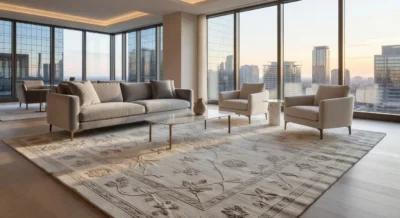
Carpet Care and Maintenance Guide: Secrets to Extending the Lifespan of Hotel Carpets
July 9, 2026
Last month, during a return visit to a Courtyard project in North China, the engineering director pointed at a piece of flooring in the lobby
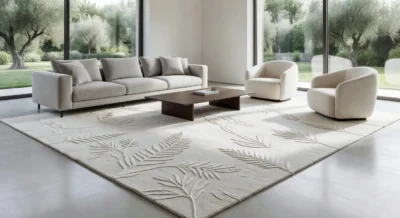
B1 Flame Retardant Standard: An Analysis of Hotel Carpet Safety Performance
July 9, 2026
Last year, at a project in Chengdu, the client suddenly informed procurement that the fire inspection had to
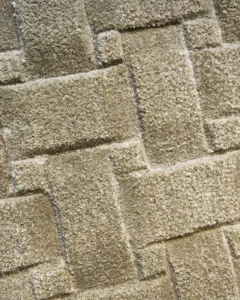
Wool vs. nylon: An in-depth comparison of high-end hotel carpet materials
July 9, 2026
Last year, while helping a Marriott project in Beijing with material selection, the client representative came right out and said
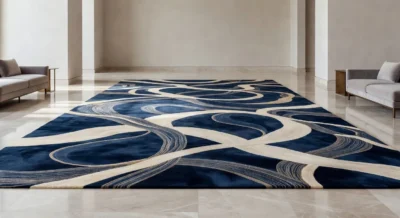
A guide to choosing carpet materials for different functional areas in hotels
July 9, 2026
Three years ago, I went back to visit a Wanda Realm hotel in Northwest China, and the engineering director took me on a tour.